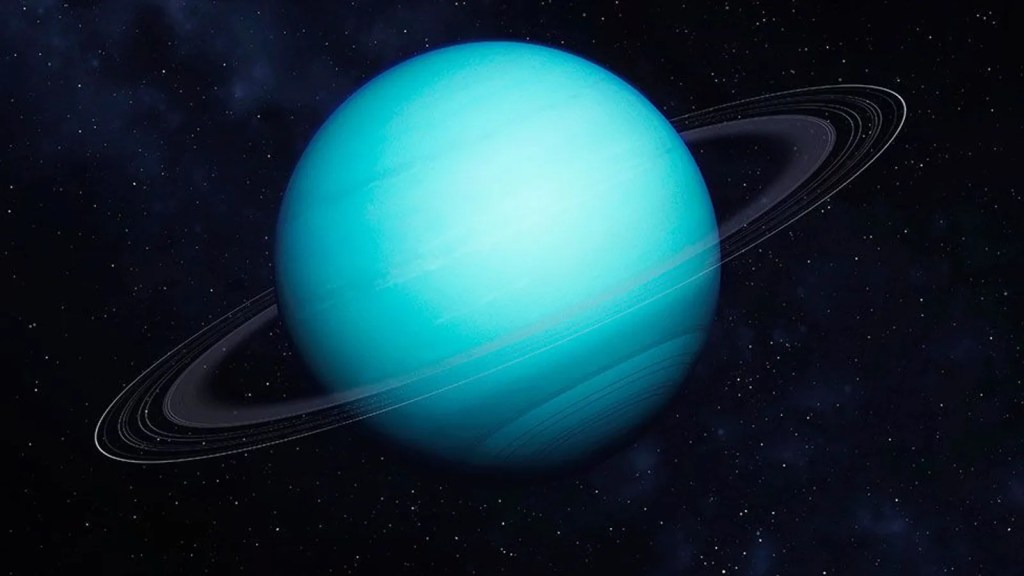
“The moons of Uranus seem to got a twist…”
Robert Stawell Bell
On 13th March 1781, Sir William Hershel went into the garden of his house in New King Street, Bath. That evening he was the first person to observe Uranus. This planet was the significant, the first to be discovered since the time of Christ and the last to be found be human observation alone. Astronomers were instantly fascinated and used their new fangled telescopes to closely observe the planet, its rings and its moons. With all this close scrutiny a problem was encountered. The observed orbit of Uranus was wonky, not as predicted by Newtonian physics. Worse still, close attention revealed all of the known planets were not travelling around the sun as predicted or expected. In 1905 Einstein published his Theory of Relativity, introducing the concept of gravitational waves. This attempt by a patent clerk to overthrow the beloved Newton did not go down well. Einstein’ s work was finally accepted later that same year, after he used the equations in his theory to calculate the exact observed orbital path of Mercury. QED: Uranus proved the Theory of Relativity. #ourfavouritequizanswer #letsmakelemonade
 Pen Paint and Scalpel