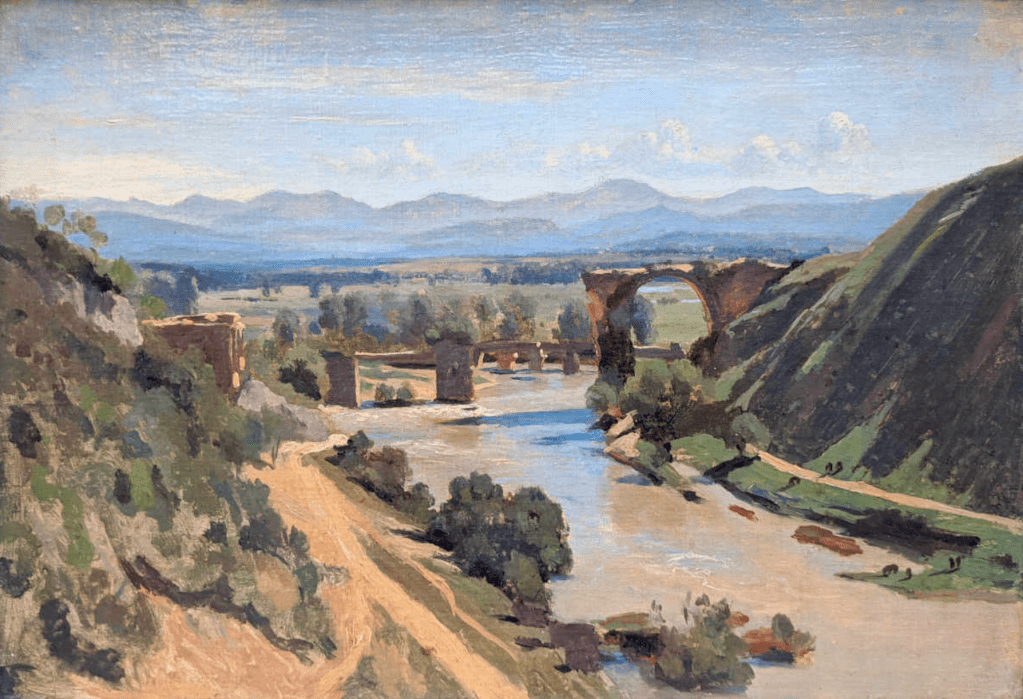
The Bridge at Nani
Camille Corot, 1826
Jean-Bapiste-Camille Corot loved to paint outside. That was an unusual activity for serious painters in the early 19th century. Most art produced was specifically commissioned work, usually with a religious theme and destined for a church, or a portrait of a wealthy benefactor. People buying art wouldn’t part with money for a random outdoor scene. Any landscapes that were created appeared as backgrounds to the key subjects, conjured from the artist’s imagination and usually with a sense of unearthly drama. Corot was different. First he was independently wealthy and could paint what he liked. Second he liked realistic, specific landscapes. When Corot was at the peak his powers virtually all high end painting was in oils and produced in studios. Without reference photos landscape painting meant going outside. A sketch was easy enough, but not an oil painting. Financial uncertainty, powdered pigments, toxic solvents, massive canvasses, unwieldy easels and the weather were too much for most. Corot loved it all. Corot is considered the forerunner of the Impressionist Movement which was all about Plein Air. Of course by that time in the late 19th century innovations such as tubes of ready to use paint had made the task much less heroic. #paintrainandwind #letsmakelemonade
 Pen Paint and Scalpel