“To achieve great things you need plan and not quite enough time…”
Leonard Bernstein
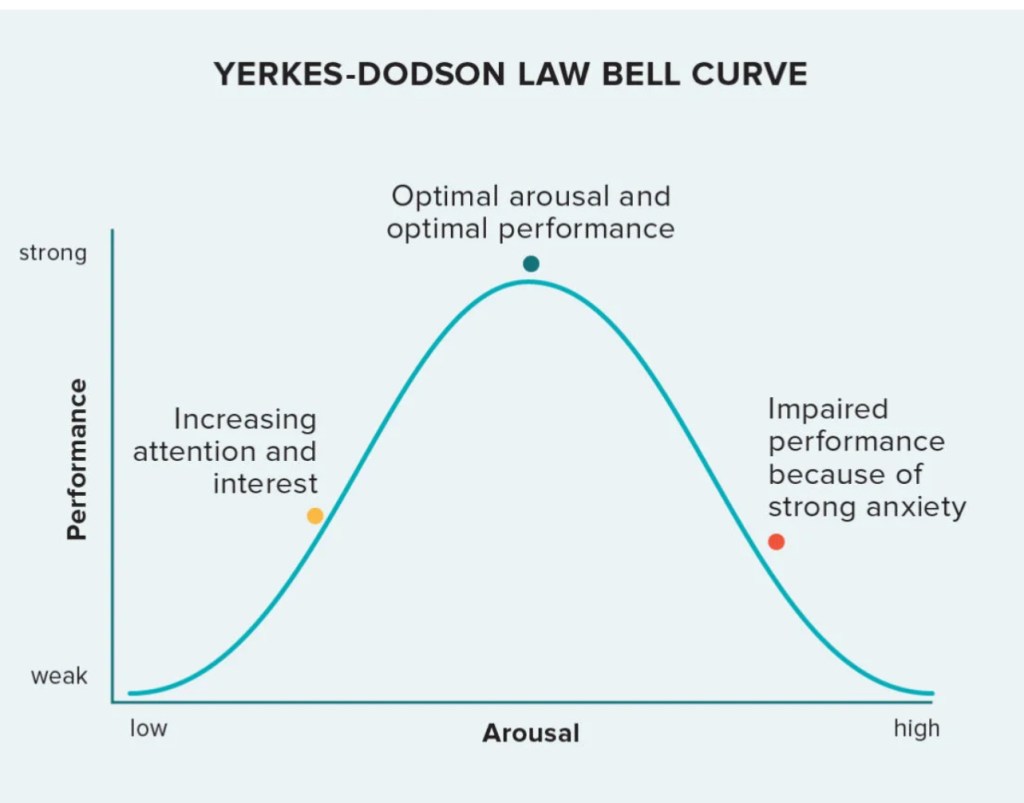
A 2024 study from Brigham and Women’s Hospital in Boston has drawn attention to the important topic of peri-operative sympathovagal balance. Put simply, increased levels of stress in the surgeon at the start of an operation is associated with significantly reduced mortality and complications. Of course this is true only up to a point. In 1908 Yerkes and Dobson introduced what they referred to as the inverted U of arousal. The pair used sequential levels of electrical shock on mice learning a new task. Low arousal (no shocks) leads to boredom, inattention and reduced performance. Optimal arousal (moderate shocks) is motivational, associated with increased focus and performance enhancement. High arousal (intense socks) leads to a fight, flight or freeze response, as a result performance rapidly degrades. The relationship between surgeons and stress is clearly complex and critical. Unresolved stress is a key driver of burnout. Yet the sense of pride and accomplishment when a challenging, stressful procedure is completed successfully is one of the great addictions of surgical practice. Perhaps the real lesson here is that surgeons are more like mice than lions. #behavioralscienceintheor #letsmakelemonade
 Pen Paint and Scalpel