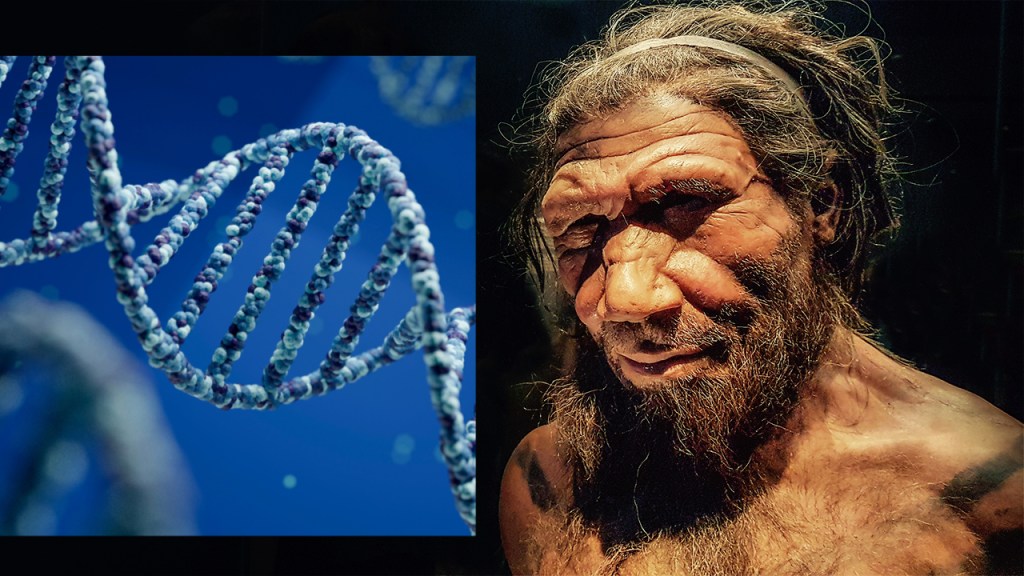
“It must be admitted that the skulls of Neanderthals are capacious…”
Charles Darwin
Burrill Bernard Crohn was a physician at Mount Sinai Hospital, NYC. In 1932 he published a landmark paper that defined the previously nebulous, catchall condition of terminal ileitis. So influential was his work, that it has since been referred to as Crohn’s disease. The aetiology of Crohn’s disease is complex and controversial, but genetics and family history clearly have a significant role to play. This is where things get interesting. Around 250,000 years ago, Homo sapiens left Africa and moved north into Europe. Here they encountered Neanderthals. Neanderthals did not survive in the long run, but there was still opportunities for interspecies exchanges of DNA. Modern Homo sapiens from European background still have around 2% Neanderthal DNA. Within that 2% are a number genes that carry increased risk of immune related illnesses. These include allergies, diabetes, severe COVID, Dupuytrens contracture and a marked susceptibility to Crohn’s. #youcantchoseyourfamily #letsmakelemonade
 Pen Paint and Scalpel