“Anatomy is to physiology, as geography is to to history…”
Jean Fernel
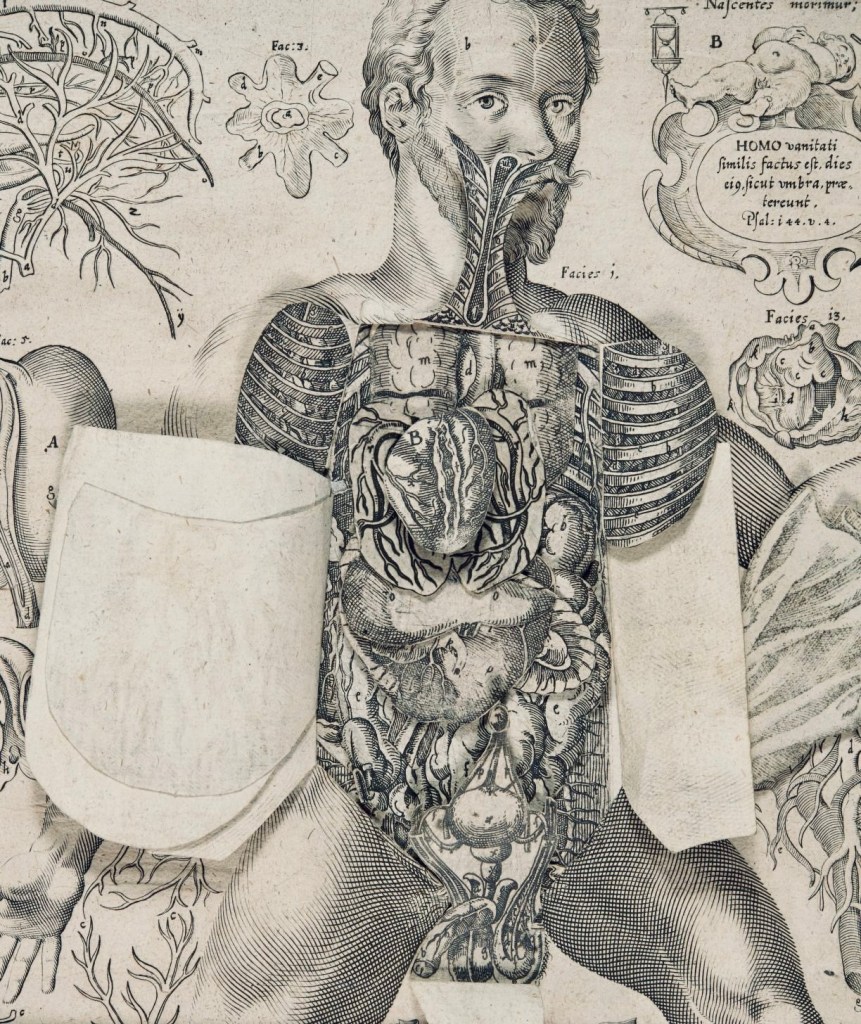
By the end of the 19th Century, pop up books had become an exclusive staple of children’s literature. Colourful, cleverly designed paper flaps turned 2D images into 3D stories, and encouraged engagement and the love of books in young readers. This was not always the case. The origin of pop up books stems from a scientific desire to demonstrate and teach human anatomy. One of the oldest to survive is a 1661 German translation of Johann Remmelin’s Captoptrum Microcosicum, originally published in Latin in 1613. It was a huge bestseller, being reprinted for well over a century, as anatomy doesn’t change particularly quickly. This text contains three images, a male, a female, and the abdomen of a pregnant female. There are 120 moveable paper flaps in total. It represents dissection without the need for a cadaver, nor the smell. The only surviving print of Remmelin’s book has just been restored and digitised online by Columbia University. #aheadofitstime #letsmakelemonade

