“Not everything that counts can be counted…”
Albert Einstein
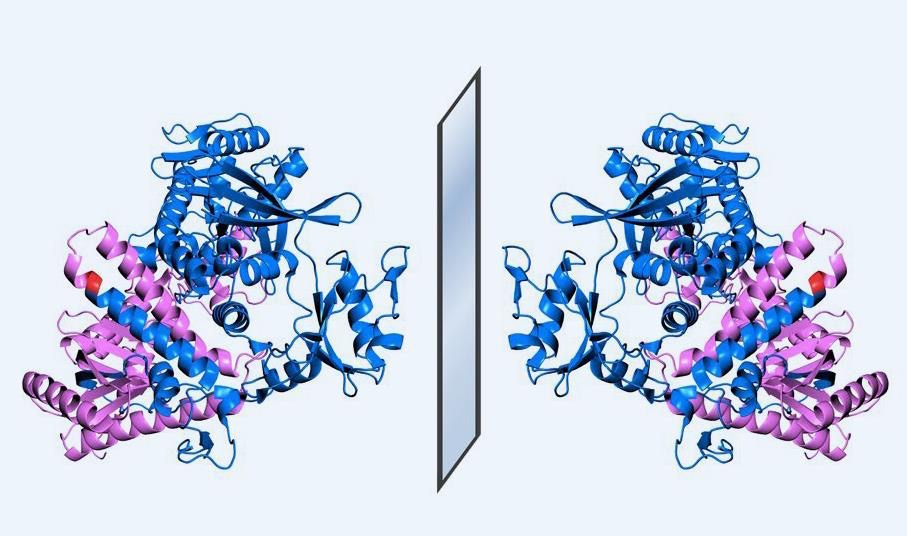
It was Louis Pasteur that first noticed under his microscope that he could separate tartaric acid crystals into two distinct groups, those that polarised light and those that didn’t. Pasteur was interested in other matters, so he made the observation, but didn’t give it much more thought. In fact he had stumbled onto chirality. Many molecules, particularly organic ones, exist as two non identical mirror images called enantiomers. Such a molecule is said to possess chirality. Each enantiomer is defined as either left or right. This is important in medicine, as many drugs are only desirably pharmacologically active in either the right or left enantiomer. Simple drug manufacturing will produce a 50/50 ratio of enantiomers, essentially reducing efficacy, increasing side effects and increasing production costs. Japanese chemist Kensa Soai built on the work of Frenchman Frank Kogan, and produced what has become known as the Soai reaction. By manipulation of the orientation of reaction catalysts, a 99.9% pure right or left molecule enantiomer can be produced. This has been game changing in drug manufacturing and beyond. Last month Kogan and Soai shared the 2026 Nobel Prize for chemistry “for the discovery of non-linear effects and autocatalysis in asymmetric organic synthesis”. #cheapsafeeffectivedrugs #letsmakelemonade

